
Valuation Report: Oceanic Manta Ray - Northwest Mexican Pacific
SPECIAL THANKS
Endangered WildlifeOÜ and Shark Allies would like to thank John Swift and the Mycorrhizal Fund for funding the report, and James Ketchum, Pelagios Kakunjá, and DataMares for data and guidance.
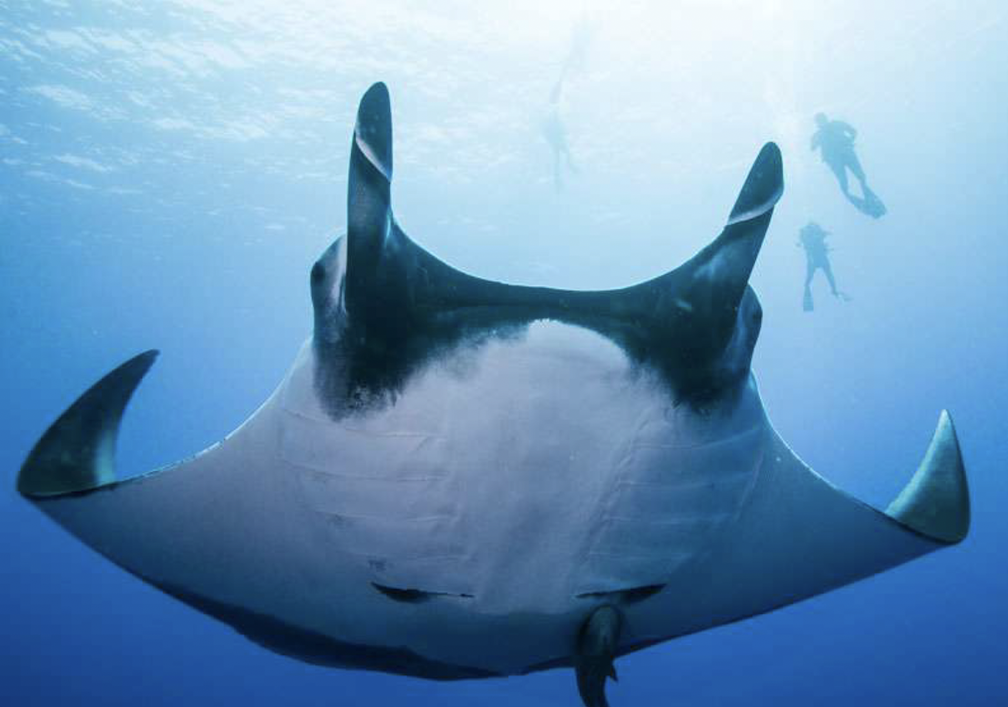
Manta Population Value: USD 138.3 million
(average per individual manta ray: USD 195,391)
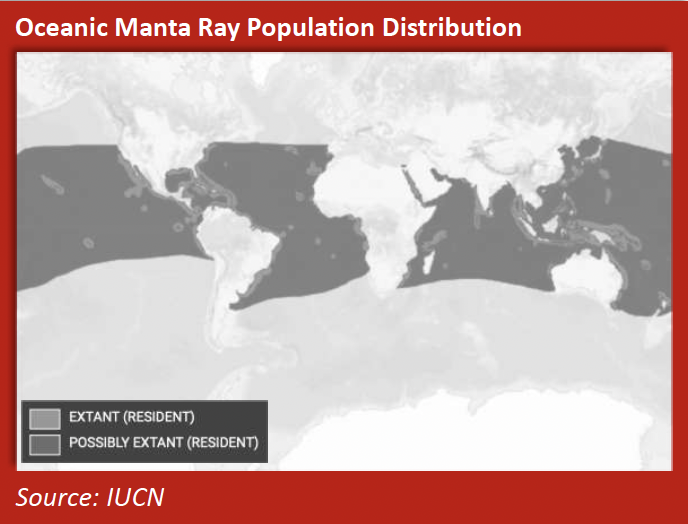
Globally, the oceanic manta ray, Mobula birostris, population is decreasing according to the IUCN (based on the last assessment in 2019). In late 2024, it was announced that it is the first manta ray species to be listed as Endangered on the Red List. Compared to the smaller reef manta ray (Manta alfredi), the oceanic manta ray lives in the deep waters of the open ocean and has a wingspan of up to 7m. They have a very distinct T-shaped shoulder pattern, and their belly spots are not commonly located between their gill slits.
This social species plays an important role in its ecosystem and provides ”taxi”, shelter, and protection for various other species. Despite their intelligence, uniqueness, and importance in maintaining the nutrient cycle, oceanic manta rays are under threat from human behaviour. The greatest identified threat is from the “fishing and harvesting aquatic resources”, while lesser threats include entanglement in nets, recreational foul hooking, and vessel strikes.
According to the Great Barrier Reef Foundation, these filter feeders are considered to be up there with dolphins, primates, and elephants in terms of intelligence and memories. In fact, for the category of fish, they have the highest brain-to-body mass ratio. According to Save Our Seas, a 2016 study indicated that they are self-aware and recognise their own reflections.
Despite this, the oceanic manta ray is seen to provide a combination of products for human consumption. These include:
Meat – either as food or shark bait
Skin – as leather for shoes, wallets, and knife handles
Liver – particularly for the oil
Gill plates – used in Chinese health tonics
Pet trade – sold to aquariums to be included in display tanks
There is a manta ray tourism industry that has increased awareness and improved monitoring, but some lesser-known locations still lack best practice protocols and codes of conduct.
THE GILL PLATE MARKET
Due to the unpleasant texture and flavor of the manta ray’s meat, the gill plates are the main reason for fishing them. This is due to the use of the gill plates in Traditional Chinese Medicine (TCM). While not an actual traditional or effective TCM remedy, they have become an ingredient in remedies that are used to reduce toxins and improve blood circulation, thereby stimulating the immune system function. The cartilaginous filaments are also used to treat fertility problems, kidney problems, chickenpox, and other common diseases.
In fact, approximately 94% of the monetary value of the fished manta ray sits with the gill plates, and the remaining 6% is generated from the rest of the individual. This implies that 1% of the wet carcass weight (or 0.2% of the dry carcass weight) represents almost the entire carcass market value (Palacios et al., 2024).
In terms of the gill plate (fresh and dried combined) prices, the price ranges are variable depending on the source and consumer (sink) countries, with latter prices being significantly higher than former prices:
Source country prices range from USD 4.80/kg in Bangladesh to USD 200.00/kg in Indonesia and India.
Consumer country prices range from USD 191.00- 1,260.00/kg.
More specifically, Chinese retailers in Guangzhou in 2022 sold gill plates for USD 283.00-456.00/kg. Comparatively, in 2024, five Chinese online platforms sold gill plates for USD 249.00-1,260/kg, with an average price across 94 online retailers of USD 511.81/kg.
A CASE FOR SUSTAINABLE TOURISM
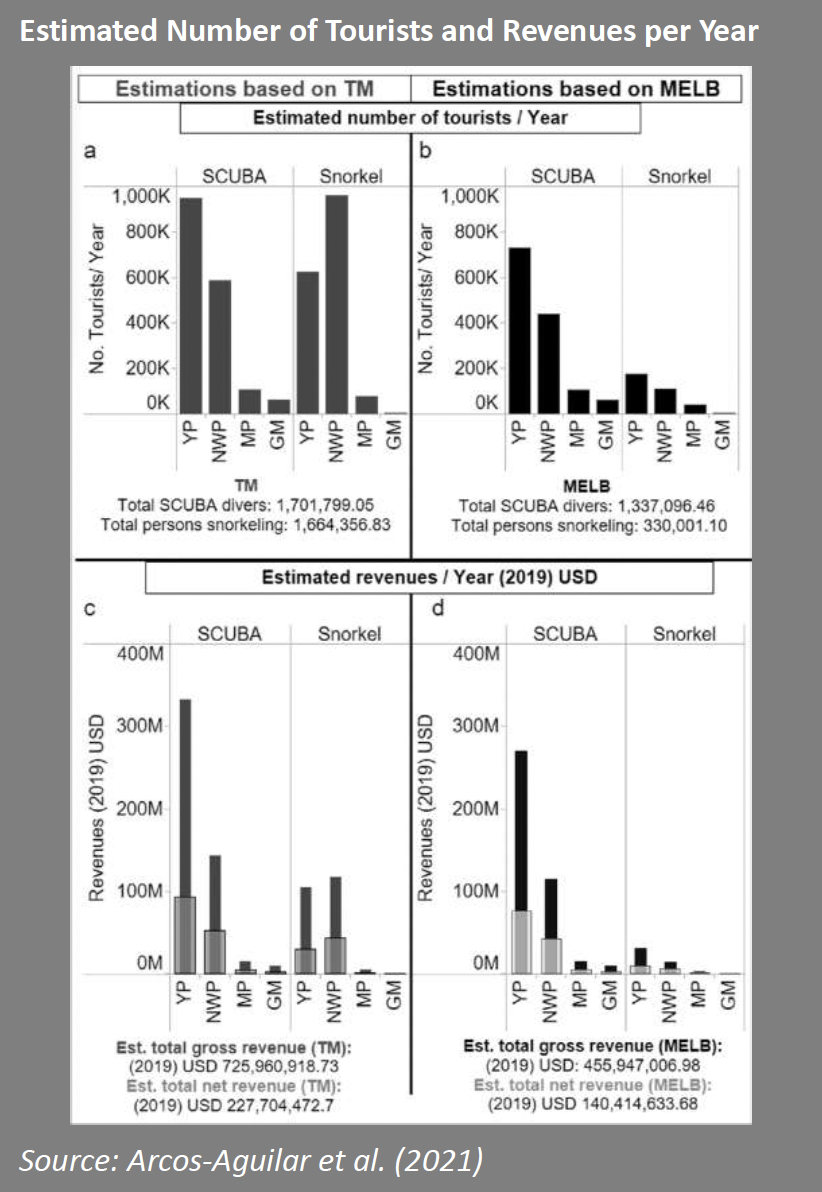
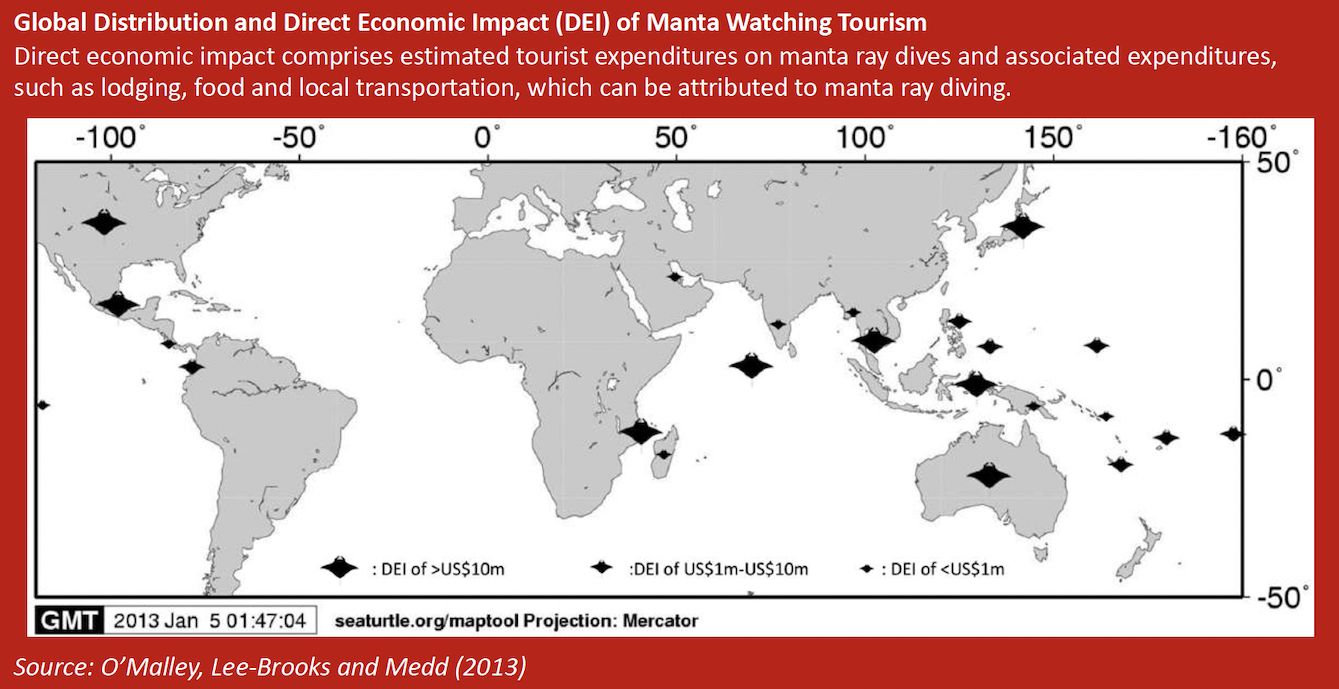
While the study is over a decade old, O’Malley, Lee-Brooks, and Medd (2013) present a strong case for the benefits of sustainable manta tourism (especially relative to gill plate fishing). The authors demonstrate that there is significantly higher incomes to be generated through manta tourism than fishing, and it is more sustainable.
Manta watching tourism is available throughout the Indian and Pacific Oceans, though its direct economic impact does vary significantly by country. That said, the impression that comes through from the study is that it can have a significant impact on the local economies and communities, which will be further explored in the valuation of the oceanic manta ray in this report.
Manta Rays of the Northwest Mexican Pacific
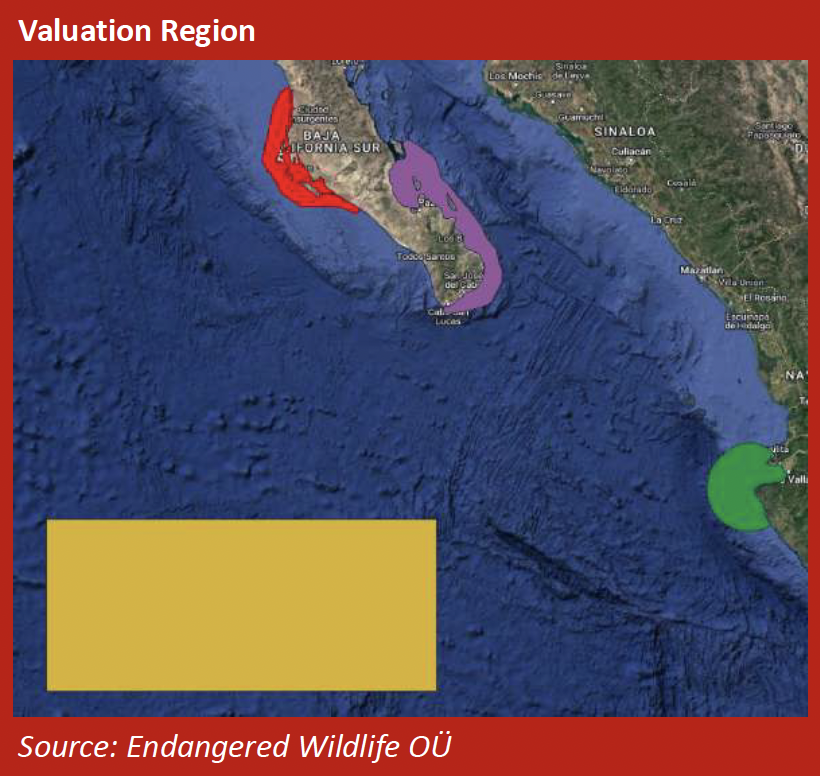
The valuation in this report covers several specific zones in the Northwest Mexican Pacific. These include:
Revillagigedo Archipelago (indicated in yellow)
La Paz, Cabo Pulmo, La Ventana, and Cabo San Lucas (indicated in purple)
Magdalena Bay (indicated in red)
Bay of Banderas (indicated in green)
For the Aesthetic and Economic Values, the regions are split into two parts:
Revillagigedo Archipelago
All the other regions
This division is because the Revillagigedo Archipelago was declared as Mexico and North America’s largest marine protected area in November 2017. It is therefore uniquely different from the other regions and should be valued as such. However, the final valuation is based on the sum of the two parts in order to represent the oceanic manta ray value for the entire area of the Northwest Mexican Pacific.
According to the Pacific Manta Research Group, the photo-ID database has identified a total of over 1,300 individual oceanic manta rays in the Revillagigedo Archipelago since 1978, of which over 500 have been seen more than once. The area has therefore become known as a bastion for the conservation and protection of oceanic manta rays, and is therefore critical to maintain it, though it is unlikely that the current population size will return to the natural, historic levels.
Comparatively, the other areas are not protected, though organisations are working towards the protection of the oceanic manta rays. Proyecto Manta Pacific Mexico works with fishermen and high school students from the local communities in the Bay of Banderas and Baja California Sur to implement monitoring, protection, and sustainable tourism. Such activities are necessary because, although fishing for oceanic manta rays was banned in Mexico in 2007, and the possession and trade of all mantas and mobulids in Mexican waters is prohibited by law, they are still for sale in markets.
While the global population size is data deficient, the previously mentioned Harty et al. (2022) study suggests that there is a superpopulation of 22,316 individuals along the Eastern Pacific. It is therefore assumed for the purpose of the valuations that it is unlikely that the local Northwest Mexican Pacific population represents more than 1% of the total global population size.
While the best time to see the manta rays is May to October, they can be spotted year-round. According to online research from the PADI Travel website, in 2025/26 there is an annual capacity of c.a. 4,400 divers for the Revillagigedo Archipelago. Based on the iNaturalist observations and observers, it is estimated that 33.5% of divers are interested in the manta rays. Liveaboard tours in the Sea of Cortez have an annual capacity of c.a. 2,300-2,400 divers. In addition to this, there is an estimated number of land-based divers and scuba divers of c.a. 1.5m. Once again, based on the iNaturalist observations and observers, it is estimated that 0.3% of divers are interested in the manta rays.
It is estimated that the maximum price of an illegally caught and sold average adult oceanic manta ray in the Northwest Mexican Pacific realistically is less than USD 15,000.
Values Based on the Current Status:
Aesthetic Value: USD 17.7m
Carbon Value: 0 (due to lack of scientific evidence)
Economic Value: USD 26.8m (assesses up to 27 lawful economic uses and also includes the negative impact of the species population collapsing relative to its primary economic value.
Value Gained Through Population Management / Lost Through Over-Exploitation
Hedge Value: USD 6.7m
Impact Value: USD 87.2m
Total Conservation Value: USD 138.3m (the total value that a species contributes to and generates for society, the economy, and the environment through its survival over a 30-year period in a specific location.)
Based on the estimated oceanic manta ray abundance in the Northwest Mexican Pacific, the implied Total Conservation Value is USD 138,336,980 (average per manta ray of USD 195,391).
The case of the oceanic manta ray is one of tragedy. Such a peaceful, intelligent, and self-aware creature faces extinction because of human activities. This is due to excessive extraction, its physiological characteristics of being a slow reproducer, and climate change.
To better understand the values mentioned above, please check out these two sections:
To request the full report, please contact us via email.