
Valuation Report: Whalesharks - NW Mexican Pacific and Gulf of Mexico
SPECIAL THANKS
Endangered WildlifeOÜ and Shark Allies would like to thank John Swift and the Mycorrhizal Fund for funding the report, and, Comunidad y Biodiversidad, Pesca Artesanal del Norte del Golfo de California: Ambiente y Sociedad, DataMares, and Sharkbook for data.
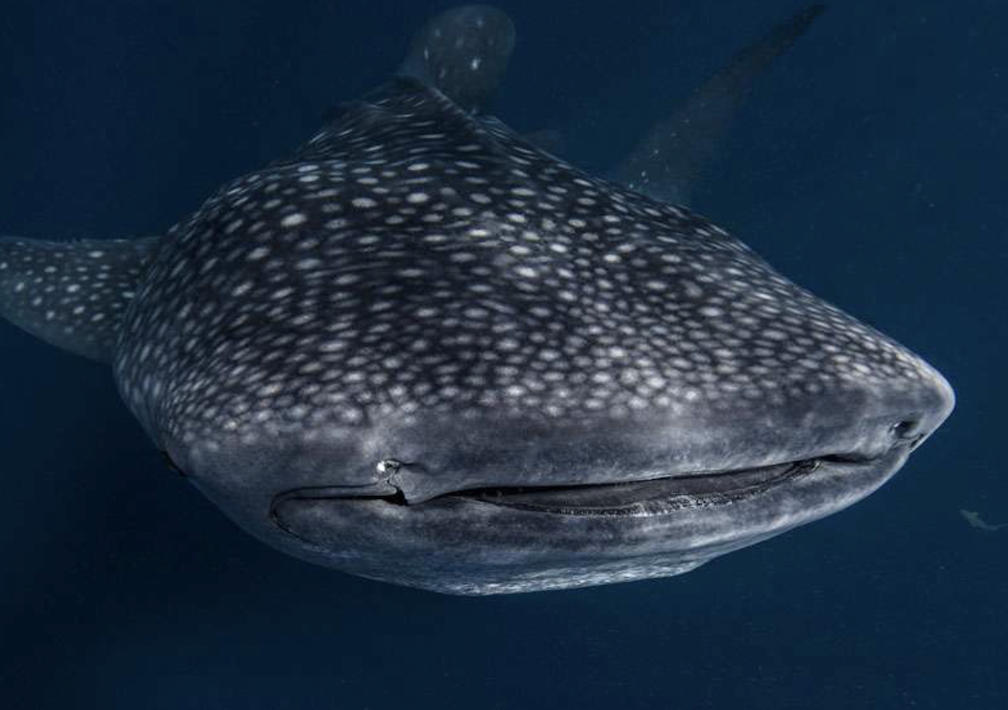
Value Northwest Pacific population: USD 126.4 million
Value gulf of mexico population: USD 208.4 million
(average per individual whale shark: USD 325,166 - 532,971)
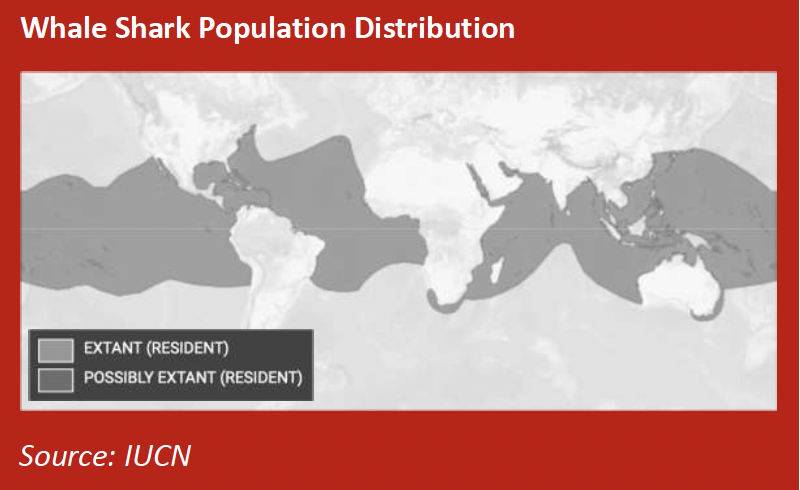
Globally, the whale shark, Rhincodon typus, population is decreasing according to the IUCN (based on the last assessment in 2016). Based on the 2016 IUCN Red List assessment, whale sharks were declared Endangered, and according to the 2021 IUCN Green Status assessment, the population is largely depleted.
If the whale shark population is given concerted and sustained conservation efforts over 100 years, the population may be able to fully recover, resulting in a High Recovery Potential for the species. However, this would require significant, ongoing, long-term changes in human behaviour and activities.
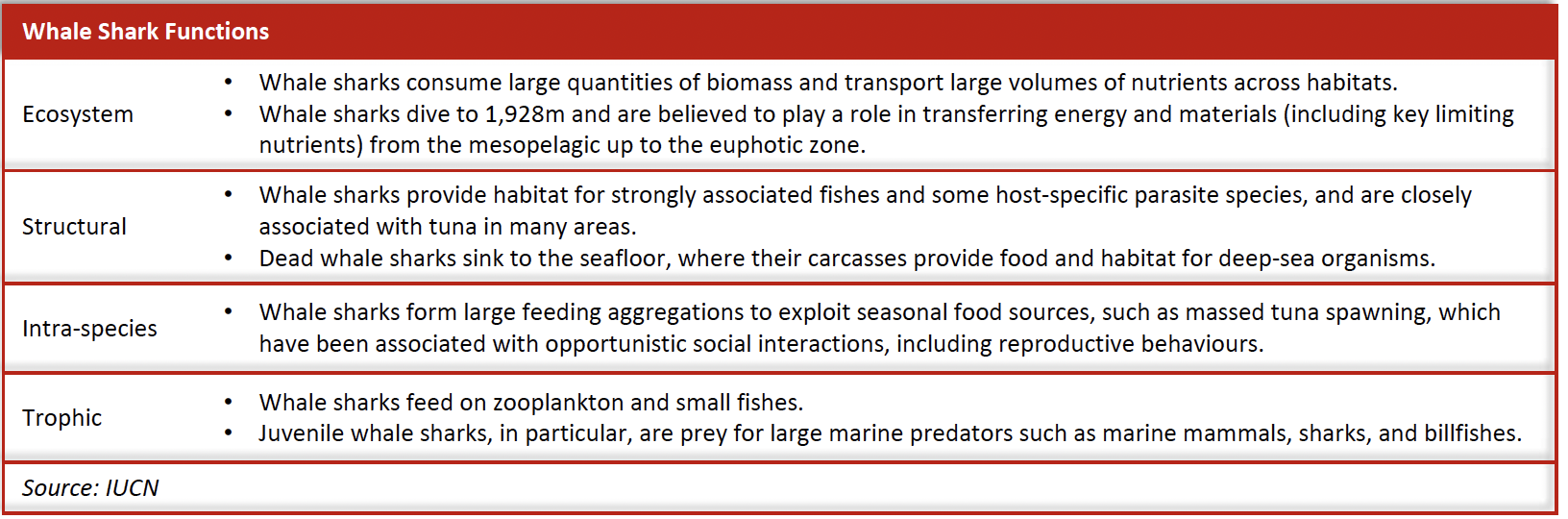
While fisheries, bycatch, and vessel strikes are the more obvious threats to the whale shark population, inappropriate marine tourism can also pose a threat to the population. This includes interference with the whale sharks, crowding or provisioning. Likewise, marine pollution in key whale shark hotspots can result in both mortalities and the displacement of individuals from preferential habitats. Furthermore, while currently unassessed, climate change also poses a real threat to whale sharks.
In terms of use, there are several legal and illegal uses of the whale shark. These include:
Tourism: whale shark viewing is available in multiple countries, including Australia, Belize, Cuba, Djibouti, Ecuador, Honduras, Indonesia, the Maldives, Mexico, Mozambique, Oman, Panama, the Philippines, St Helena, Saudi Arabia, the Seychelles, Tanzania and Thailand. According to studies in the early 2000’s and 2010’s, whale shark tourism was already worth multimillions, and according to Graham (2007), global whale shark tourism was expected to exceed USD 42m per year.
Large- and small-scale bycatch: since 1991, there has been no known legal targeted fisheries for whale sharks in the Atlantic. In the Asia-Pacific region, there has been limited targeted fishing for meat and live whale sharks in Taiwan and China. In India and the Philippines, the species have been protected since 2001 and 1998, respectively.
Shark fin trade: large whale shark fins are highly valued as decoration pieces, which is a contributing factor to the species’ endangered status.
Whale sharks are protected and listed in a number of international conventions and agreements. These include Annex I (Highly Migratory Species) of the United Nations Convention on the Law of the Sea (UNCLOS), Appendix II of the Bonn Convention for the Conservation of Migratory Species of Wild Animals (CMS), and Appendix I of the Convention on International Trade in Endangered Species (CITES), as of late 2025.
Whale shark tourism: Mexico Focus
Whale sharks, the largest species of fish, are popular amongst divers and wildlife spotters due to their size and ”gentle giant” reputations. Each whale shark has its own unique set of spots, making it possible to identify and monitor each individual. Despite this, whale sharks remain a delicacy in many parts of the world. There is high international demand (and thus high prices) for the fins, meat, and oil.
As an alternative to extractive targeted fishing, the non-extractive whale shark tourism industry has boomed. In Mexico, whale shark season runs from mid-May / June to mid-September. It is during these months that whale shark diving is generally offered. Whale shark diving is most popular around Cancun, particularly Isla Mujeres and Isla Holbox.
To help support the protection of the whale sharks, Rafael Pacchiano, the Secretary of the Environment and Natural Resources, signed a decree for a protected marine zone. This encompasses the waters around Isla Mujeres, Chiquilá, and Holbox. This is a vital transition zone between the Gulf of Mexico and the Caribbean Sea. However, on the NWP in the Baja California Sur, an agreement was signed between the port administration and Aquamayan Adventures to permit mega cruise ships to enter Bahía de La Paz. Following this, environmental organisations have been urging the government to revoke the agreement due to the potential negative impact it could have.
Considering the importance of Bahía de La Paz for marine life, particularly whale sharks, the influx of mega cruise ships could result in the rise in vessel strikes. This poses a significant threat – according to Whale Shark Mexico, which has been monitoring whale sharks in Bahía de La Paz since 2003, 66% of whale shark juveniles have been victims of vessel strikes. Overall, though, García- Baciero et al. (2025) indicate that 50-60% of whale sharks in the region are injured annually due to irresponsible tourism. The whale shark tourism industry is also an important sector from the employment perspective. According to Ninh (2024), the industry generates at least 750 direct jobs in Quintana Roo with 75% of the jobs being generated in the communities of Holbox, Chiquilá and Isla Mujeres.
Valuation of the whalesharks in Mexican Pacific
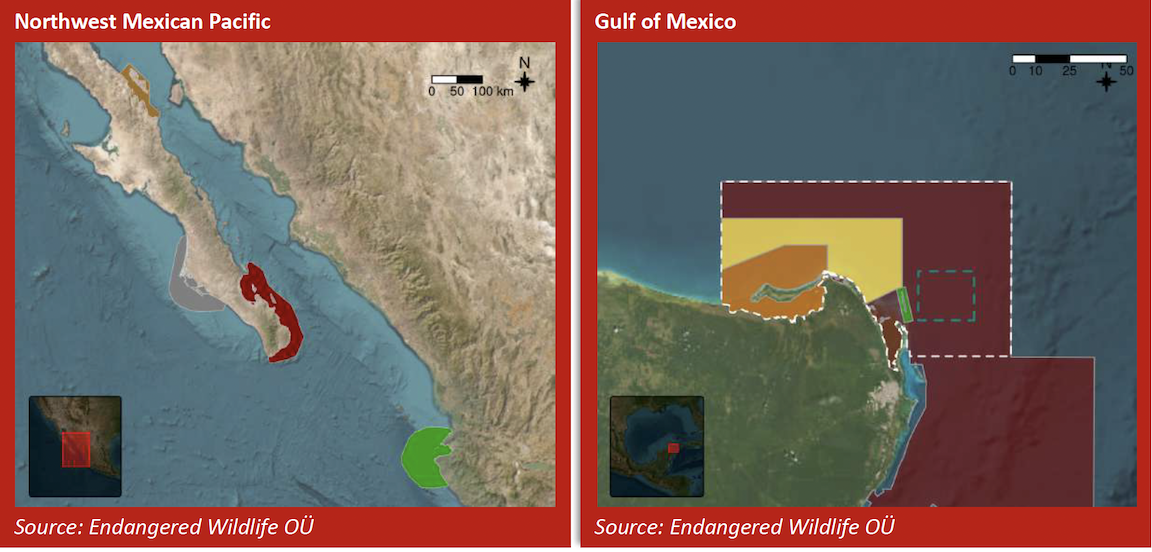
The valuation in this report covers several specific zones in the Northwest Mexican Pacific (NWP) and Gulf of Mexico (GOM).
In the NWP, the regions include:
Bay of Banderas (indicated in green)
La Paz, Cabo Pulmo, La Ventana, and Cabo San Lucas (indicated in red)
Magdalena Bay (indicated in gray)
Los Angeles Bay (indicated in yellow)
Comparatively, in GOM, the regions include:
El Azul (indicated in blue dashed lines)
Contoy Island National Park (indicated in green)
Mexican Caribbean Biosphere Reserve (indicated in red)
Yum Balam Flora and Fauna Protection Area (indicated in orange)
Whale Shark Biosphere Reserve (indicated in yellow)
This area is known to have some of the largest whale shark aggregations that have been observed globally. It is therefore one of the more popular whale shark diving sites with a significant number of annual tourists.
Mexican Population, Pacific side: The seasonal aggregations of whale sharks in the Gulf fo California take place during December to February, with the lowest abundances being during June to September (Garc.a- Baciero et al., 2025). Bahia de Los Angeles seems to be the largest aggregation site in the Gulf, followed by Bahia de La Paz. Other known aggregation sites exist, for example Isla Espiritu Santo (near La Paz Bay) and Gorda Banks (located between Cabo Pulmo and Cabo San Lucas protected areas)
A study that modelled whale shark population abundance in Bahia Los Angeles found a superpopulation size of 1,176 individuals. The Gulf of California (GoC) is a semi-enclosed sea known for its high biodiversity and primary production (Wilkinson et al., 2009). Globally, it is one of the only areas from which immature whale sharks, of both sexes, and large mature females have been routinely recorded (Clark and Nelson, 1997; Eckert and Stewart, 2001; Ramírez-Macías et al., 2007; Ramírez-Macías et al., 2012; Ketchum et al., 2013; Cochran et al., 2016). Some of the few reported neonatal whale sharks have also been found in this region (Wolfson, 1983). The regular presence of female sharks, almost exclusively pregnant, in deep waters in the southern part of the GoC suggests that their presence is related to breeding. Together this points indicate that the region is one of the few locations globally where the movements and habitat use of adult and juvenile whale sharks can be readily investigated in response to similar environmental factors (Ramírez-Macías et al., 2017).
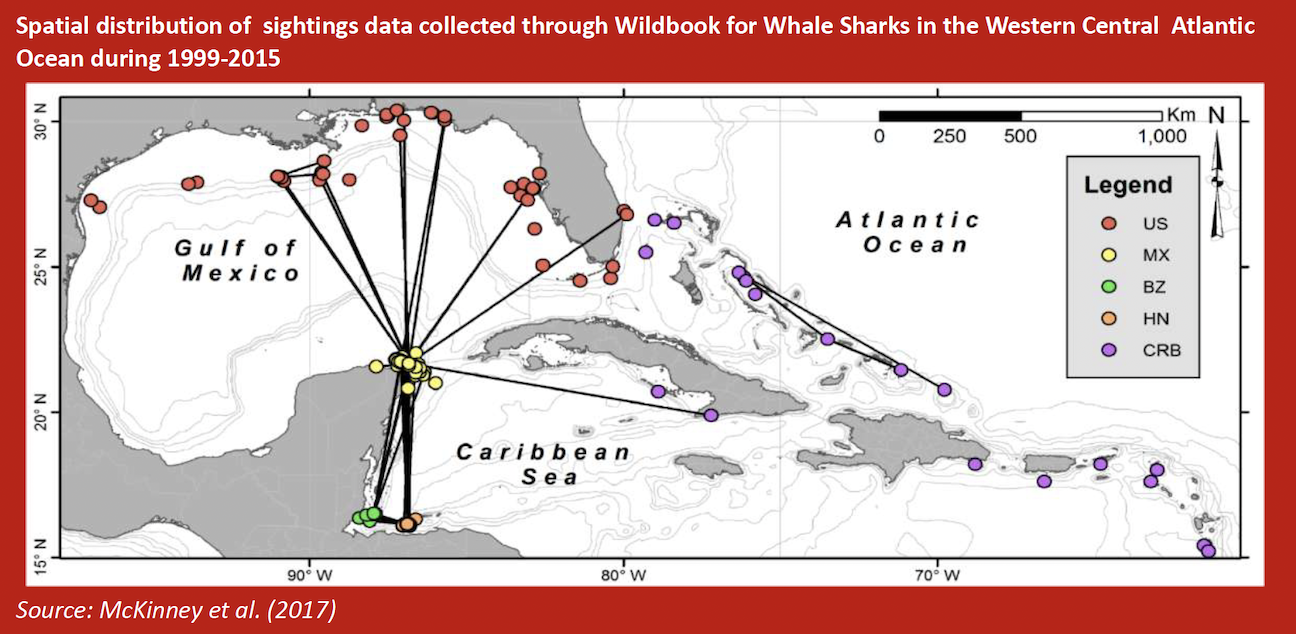
Mexico Population: Gulf of Mexico / Caribbean Sea: Off the Yucatán peninsula of Mexico, whale shark abundances are highest from May through September. The aggregation site in the Caribbean Sea off Mexico is a hotspot for the species (Hueter et al., 2013; Norman et al., 2017). The largest-known aggregation as of February 2016 identified 1,100 sharks (Norman et al., 2017) from 1992-2014, 48.6% of which were re-sighted in at least one other year.
The largest aggregation sites in the area are the green water site north of Cabo Catoche in the Whale Shark Biosphere Reserve and a blue water zone called The Azul, which is inside of the Mexican Caribbean Biosphere Reserve. The most numerous aggregation of whale sharks ever recorded globally was observed in the Azul area (420 individuals, de la Parra Venegas et al. 2011), which is considered to also be a core foraging location for oceanic manta rays (Mobula birostris) (Trujillo- Córdova et al., 2020).
The whale shark tourism in Mexico:
In order to estimate the number of whale shark tourists, the 2018 baseline by Ziegler and Dearden (2021) is used. This includes:
NWP:
Bahia de Los Angeles – 7,020
Bahia de La Paz – 45,000
GOM:
Isla Holbox – 17,000
Isla Mujeres – 93,000
The NWP total of 52,020 sits within the midrange of the García-Baciero et al. (2025) tourism carrying capacity, assuming 10 passengers per boat for the peak four months of the year. The 2018 numbers were then adjusted relative to the annual growth in Mexican tourism to calculate a current whale shark tourism figure for the two regions. This resulted in estimated levels returning closer to pre-Covid levels with NWP at 51,450 and GOM at 106,452.
NWP: 51,450 annual whale shark tourists
GOM: 106,452 annual whale shark tourists
Values Based on the Current Status:
Northwest Mexican Pacific Population:
Aesthetic Value: USD 28.3million
Carbon Value: 0 (due to lack of scientific evidence)
Economic Value: USD 53.4million (assesses up to 27 lawful economic uses and also includes the negative impact of the species population collapsing relative to its primary economic value.
Value Gained Through Population Management / Lost Through Over-Exploitation
Hedge Value: USD 8.1million
Impact Value: USD 36.6million
Total Conservation Value: USD 126,489,613 (the total value that a species contributes to and generates for society, the economy, and the environment through its survival over a 30-year period in a specific location.)
average per whale shark (Pacific side) USD 325,166
Gulf of Mexico Population:
Aesthetic Value: USD 56.7million
Carbon Value: 0 (due to lack of scientific evidence)
Economic Value: USD 107.8million (assesses up to 27 lawful economic uses and also includes the negative impact of the species population collapsing relative to its primary economic value.
Value Gained Through Population Management / Lost Through Over-Exploitation
Hedge Value: USD 9.1million
Impact Value: USD 34.7million
Total Conservation Value: USD 208,391,791 (the total value that a species contributes to and generates for society, the economy, and the environment through its survival over a 30-year period in a specific location.)
Average per whale shark (Caribbean side) USD 532,971
To better understand the values mentioned above, please check out these two sections:
To request the full report, please contact us via email.